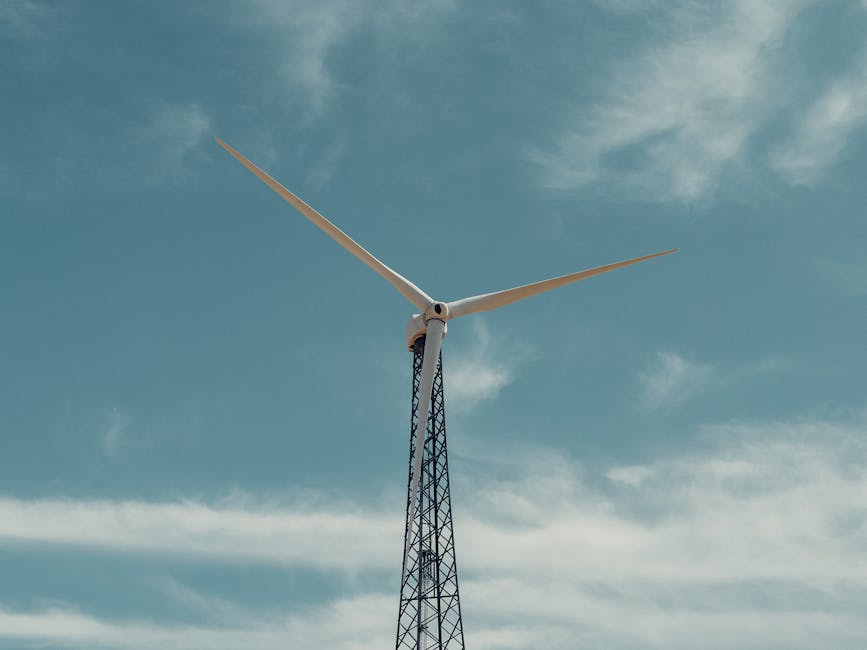
Tag: high-performance leadership

  • Creative Innovation: Turning Ambiguity into Competitive Advantage

    Creative Innovation: Turning Ambiguity into Competitive Advantage

    {
    “title”: “Creative Innovation: Turning Ambiguity into Competitive Advantage”,
    “meta_description”: “True innovation is not just about invention; it is about creating opportunities where others see constraints. Learn how to architect creative systems for growth.”,
    “tags”: [“strategic innovation”, “business creativity”, “operational excellence”, “decision-making”, “high-performance leadership”, “business systems”],
    “categories”: [“Business”, “Strategy”],
    “body”: “

    The Architecture of Opportunity

    Most organizations confuse innovation with mere product iteration. They optimize existing processes, trim edges, and call it progress. Real innovation, however, starts with a fundamental departure from established logic. It is the ability to map unseen connections between disparate data points and identify value where your competitors see only noise. For the high-performer, creativity is not an abstract concept; it is an analytical tool for strategic positioning.

    When you approach innovation as a creative act rather than a technical requirement, you shift your mental framework from preservation to creation. The objective is to build systems that capture the latent value hidden within complex, often ambiguous business environments.

    Translating Chaos into Operational Strategy

    Creativity acts as the connective tissue between raw data and actionable execution. Without a creative lens, data remains static. When an operator applies creative thinking to core operations, they begin to see the underlying friction points that others dismiss as inevitable. By re-imagining how teams collaborate or how value is delivered, you create proprietary advantages that are difficult for competitors to replicate.

    This requires a departure from traditional linear thinking. Consider the implementation of AI systems. While many firms focus on automation to reduce headcount, the creative leader focuses on augmentation to expand capability. By redesigning the output of the human-machine interface, they create opportunities for entirely new business lines rather than simply cutting costs.

    The Economics of Constraint

    Constraints are the catalyst for creative innovation. When resources are abundant, discipline often atrophies. When resources are scarce, the requirement for creative problem-solving intensifies. Leaders who master this dynamic understand that scarcity forces a rigorous prioritization process. This is where effective decision-making thrives.

    You must stop treating constraints as barriers and start treating them as parameters of a creative challenge. If you cannot solve a problem with your current capital or time allocation, the error lies in your model, not your resources. Re-evaluating the model through a creative lens often reveals that the resources you require are not missing, but misallocated.

    Scaling the Creative Feedback Loop

    Innovation is rarely a singular event. It is the output of a sustainable system designed for iteration. To maintain a competitive edge, you must build robust feedback loops that reward the identification of novel opportunities. This requires an environment where failure is treated as a high-fidelity data point rather than a professional setback. For further insights on institutionalizing high performance, visit thebossmind.net to explore our network resources.

    True growth occurs when creativity is embedded into the DNA of the organization. It is the systematic pursuit of the non-obvious, ensuring that your firm remains on the offensive while others are stuck defending outdated paradigms. Success in this domain relies on your ability to disconnect from consensus thinking and focus entirely on the evidence of market potential.


    }

  • The Trust Dividend: How Radical Technology Adoption Fuels Strategy

    The Trust Dividend: How Radical Technology Adoption Fuels Strategy

    {
    “title”: “The Trust Dividend: How Radical Technology Adoption Fuels Strategy”,
    “meta_description”: “Trust in technology is the ultimate competitive advantage. Learn how high-performing leaders use system reliability to decentralize decision-making and scale.”,
    “tags”: [“technology adoption”, “high-performance leadership”, “digital transformation”, “operational excellence”, “strategic decision making”],
    “categories”: [“Technology”, “Business”],
    “body”: “

    The Asymmetry of Skepticism

    Most organizations treat technology as a cost center, a series of upgrades that promise efficiency but often deliver friction. This skepticism acts as a ceiling on growth. When leaders view digital infrastructure as a burden, they default to micromanagement and manual oversight, effectively capping the output of their teams. In contrast, high-performers view technology as a trust-based architecture. By automating the verification of truth, they eliminate the need for constant human supervision, allowing for a radical distribution of authority.

    Encoding Operational Integrity

    Trust in technology begins with the shift from human-gated processes to code-gated verification. If you do not trust your systems, you are forced to build layers of middle management—human buffers designed to prevent errors. This is the antithesis of robust systems. When data integrity is encoded into your pipeline, you create a source of truth that no longer requires executive validation. This creates the operational execution velocity that separates market leaders from laggards.

    Consider the difference between a legacy bank and a protocol-based financial firm. The former relies on human auditors and layered sign-offs; the latter relies on cryptographic proof. The speed at which an organization can move is directly proportional to how much it delegates to its tech stack. If your leadership team is still manually reviewing logs or double-checking manual entries, you have failed to build trust in your digital infrastructure.

    The Multiplier Effect of AI Integration

    The current era of AI/Neural Networks requires a profound leap of faith. Leaders who treat AI as an intern—constantly checking its work and correcting its nuance—miss the utility of the tool. Those who treat AI as a foundational layer, automating entire decision loops, unlock massive scale. This requires a shift in strategic mindset: you stop managing tasks and start managing the parameters of the model. When you trust the underlying architecture of the AI, you no longer need to be involved in the middle of the workflow. You only monitor the outcomes.

    De-risking Through Decentralization

    Trust-based technology allows for the decentralization of accountability. When a system provides a transparent, immutable record of activity, you can hold individuals accountable for outcomes rather than processes. This is the essence of effective leadership. You stop policing the ‘how’ and focus entirely on the ‘why’ and the result. This transparency, supported by the BossMind network, empowers high-performers to act with autonomy, knowing that the tech stack provides a safety net against systemic failure.

    The Cost of Low Trust

    A lack of trust in your digital tools leads to a phenomenon known as technical drag. It is the friction caused by duplicate entries, shadow IT, and the constant need to translate between non-integrated platforms. To resolve this, you must ruthlessly audit your stack. If a tool does not provide the reliability required to automate a critical path, replace it. Operating with low-trust tools forces your best people to spend their time on administrative maintenance rather than strategy or decision-making.

    As noted on thebossmind.com, the goal is not merely to implement technology but to build an ecosystem that rewards trust. Your ability to scale is predicated on your ability to disconnect human intuition from routine verification.


    }

  • The Future of Empathy: Psychology in the Age of Synthetic Intelligence

    The Future of Empathy: Psychology in the Age of Synthetic Intelligence

    {
    “title”: “The Future of Empathy: Psychology in the Age of Synthetic Intelligence”,
    “meta_description”: “Empathy is shifting from a soft skill to a hard strategic asset. Explore how psychology and AI will redefine emotional intelligence in high-stakes leadership.”,
    “tags”: [“emotional intelligence”, “future of work”, “artificial intelligence”, “psychological frameworks”, “high-performance leadership”, “cognitive science”],
    “categories”: [“AI / Neural Networks”, “Self Help”],
    “body”: “

    The Devaluation of Performative Empathy

    For decades, corporate leadership treated empathy as a performative social script—a veneer applied to mitigate turnover and boost morale. This model is collapsing. As synthetic intelligence begins to simulate active listening and responsive communication with near-perfect accuracy, the market value of basic emotional availability is plummeting to zero. If a machine can mirror your tone, acknowledge your frustrations, and suggest appropriate solutions, what becomes of the human practitioner?

    The future of empathy is not found in the superficial validation of feelings, but in the rigorous application of psychological depth to complex strategic decision-making. Leaders must move beyond being ‘relatable’ and transition toward being ‘perceptually acute.’ This is the next frontier of modern leadership: using empathy as a diagnostic tool for identifying systemic dysfunction within an organization.

    The Cognitive Architecture of Modern Empathy

    Modern psychology differentiates between affective empathy, which involves mirroring another person’s emotional state, and cognitive empathy, which involves understanding another person’s perspective. In an operational context, affective empathy is often a liability, leading to emotional contagion and poor decision-making. High-performers require cognitive empathy—the ability to map the mental model of a stakeholder, employee, or competitor without losing their own analytical edge.

    By treating empathy as a data-gathering exercise, leaders can decode hidden friction points in their internal operations. When an engineering team resists a new product direction, the answer is rarely found in the technical specs. It resides in the unspoken fears regarding role stability, status, or autonomy. A leader capable of mapping these psychological coordinates can adjust their implementation strategy long before the friction becomes a bottleneck.

    Integrating Synthetic and Biological Intelligence

    The marriage of artificial intelligence and behavioral psychology creates a unique opportunity for high-level leverage. AI can synthesize vast amounts of team interaction data to flag communication patterns that signal burnout or disengagement. However, the human leader must act as the arbiter of this information. The machine provides the heatmap; the human provides the context-dependent intervention.

    This is where psychological maturity becomes the ultimate competitive advantage. While AI operates on probabilities, humans operate on the edge of chaos. Being able to offer presence during periods of extreme uncertainty is a capacity that algorithms cannot replicate. This is not about being ‘nice’; it is about maintaining a stabilizing signal amidst high-stakes volatility.

    Systematizing Emotional Depth

    To institutionalize this approach, organizations must build formal frameworks for empathy that mirror their financial reporting standards. This involves:

    • Radical Transparency: Establishing clear feedback loops that prioritize the ‘why’ behind decisions rather than just the ‘what.’
    • Mental Model Auditing: Regularly soliciting views from dissenting stakeholders to identify blind spots in the executive team’s performance metrics.
    • Constraint-Based Listening: Training teams to listen for specific indicators—such as fear of obsolescence or misalignment of incentives—rather than general grievances.

    By treating empathy as a quantifiable variable within the organization’s broader network architecture, firms can create a culture that is inherently resilient to the disruptive effects of technological displacement. Empathy is no longer a soft skill—it is a foundational component of durable entrepreneurship and long-term organizational health.


    }

  • The Brutal Economics of Space: Historical Lessons for Modern Founders

    The Brutal Economics of Space: Historical Lessons for Modern Founders

    {
    “title”: “The Brutal Economics of Space: Historical Lessons for Modern Founders”,
    “meta_description”: “Space exploration is defined by extreme constraints. Discover how history’s most ambitious missions reveal hard truths about risk, scaling, and leadership.”,
    “tags”: [“space exploration history”, “strategic planning”, “high-performance leadership”, “operational constraints”, “risk management”],
    “categories”: [“History”, “Business”],
    “body”: “

    The Anatomy of High-Stakes Failure

    Space exploration is the ultimate test of operational excellence. It is a domain where a rounding error in a calculation or a misaligned sensor results in the total destruction of assets. History demonstrates that the primary bottleneck in space isn’t just physical physics; it is the management of extreme complexity under existential risk. When we examine the trajectory of the Apollo program or the early Soviet lunar efforts, we see a masterclass in strategic planning that modern organizations often lack.

    The central tension in every historical space endeavor is the trade-off between speed and redundancy. Leaders must decide whether to iterate rapidly at the cost of safety or to over-engineer at the cost of progress. This is the same decision-making friction faced by founders today.

    The Burden of Legacy Systems

    The history of space flight is a case study in technical debt. When NASA transitioned from the Gemini program to Apollo, they were forced to integrate legacy systems into a vehicle that had to perform tasks their predecessors never contemplated. This forced interoperability created massive hurdles in project management. In any professional environment, the systems you build today will define the constraints of your innovation tomorrow.

    Operations in space show that rigid architectures become brittle. Organizations that rely on monolithic structures often fail when conditions shift. The historical transition from the expendable rocket paradigm to reusable technology mirrors the shift in software development where we move from fixed releases to continuous integration.

    The Human Element in High-Performance Teams

    Beyond hardware, space exploration exposed the limitations of human decision-making. During the Apollo 13 crisis, the leadership team on the ground had to engage in rapid, high-stakes decision-making without complete data. This remains the gold standard for incident response. They did not retreat into bureaucracy; they empowered engineering cells to solve discrete parts of the puzzle, effectively compartmentalizing the chaos.

    This decentralization is the bedrock of thebossmind.com philosophy regarding team autonomy. When you remove the middleman and allow those with the highest context to make the call, you gain speed. However, speed without rigorous, objective-driven verification is merely gambling.

    Resource Allocation and Institutional Inertia

    Space history is littered with the corpses of programs that failed because of misaligned incentives. The shift from the Space Shuttle—a project designed for long-term versatility—to the current era of commercial spaceflight highlights the shift from state-controlled monopolies to competitive market dynamics. As discussed in our analysis of performance metrics, those who own the launch cadence dictate the market.

    The operational reality is that space remains a hostile environment. You cannot \”fix it in post.\” This necessitates a culture of extreme preparation, a trait often overlooked in modern tech startups that favor the ‘fail fast’ mantra. In the context of deep tech, failing fast is not an advantage; it is a catastrophe. Leaders must distinguish between the agility of their feature sets and the non-negotiability of their infrastructure.

    The Future of Orbital Strategy

    We are entering an era where space-based assets are no longer scientific curiosities but essential business infrastructure. The challenges of the past—radiation hardening, orbital debris, and launch costs—are now the KPIs of the future. By analyzing these historical constraints, we can build more resilient companies on Earth. The lesson is clear: if you cannot manage the constraints of a project with limited resources and high stakes, you have not yet mastered the fundamentals of your industry.


    }

  • The Economic Edge: Renewable Energy as a Strategic Growth Engine

    The Economic Edge: Renewable Energy as a Strategic Growth Engine

    {
    “title”: “The Economic Edge: Renewable Energy as a Strategic Growth Engine”,
    “meta_description”: “Beyond sustainability, renewable energy offers leaders a competitive advantage. Discover how decentralized power systems drive operational efficiency and growth.”,
    “tags”: [“renewable energy economics”, “business strategy”, “operational efficiency”, “energy infrastructure”, “capital allocation”, “high-performance leadership”],
    “categories”: [“Business”, “Economy”],
    “body”: “

    The Shift from Cost Center to Competitive Advantage

    For most organizations, energy has historically existed as a predictable, immutable line item—a utility cost to be managed rather than a variable to be optimized. This view is a strategic error. As energy markets undergo a profound transition, the adoption of renewable infrastructure has shifted from an environmental mandate to a core component of enterprise strategy. Leaders who treat the energy transition as a purely regulatory hurdle miss the underlying shift in economic power dynamics.

    Decentralization and Operational Resiliency

    The primary economic opportunity within renewables lies in the shift toward distributed energy resources. Centralized power grids represent a single point of failure; decentralized, onsite generation represents an operational hedge. By integrating solar, wind, or battery storage into localized industrial sites, organizations decouple their production cycles from utility price volatility. This is not merely an exercise in sustainability—it is a brutal pursuit of stability.

    When an organization controls its own energy generation, it converts a variable market price into a fixed capital expenditure. For high-energy industries, this provides a predictable cost floor, allowing for more aggressive long-term planning and capital allocation. This is the essence of effective decision-making in volatile markets: removing uncertainty where possible.

    The Multiplier Effect of Energy Infrastructure

    Investments in energy infrastructure create a compounding effect on productivity. Modern smart grids, supported by AI-driven load balancing, allow firms to reallocate power usage dynamically based on real-time market signals. This intelligent consumption ensures that energy is directed to high-value output phases while trimming excess during periods of low activity. Leaders who integrate these automated systems move beyond simple consumption tracking into a state of active power orchestration.

    Furthermore, early adoption of renewable infrastructure often unlocks government incentives and tax credits that directly improve the internal rate of return (IRR) on new facilities. Ignoring these levers in your capital planning is essentially leaving equity on the table.

    Aligning Sustainability with Fiscal Discipline

    Many firms fail to integrate renewables because they focus on short-term payback periods. This is a failure of vision. Renewable energy projects function as long-term assets that hedge against future carbon taxation and inflationary pressures on fossil fuels. At The BossMind, we advocate for viewing these projects through the lens of terminal value rather than quarterly P&L cycles. The organizations that thrive in the next decade will be those that reclassified energy from a utility to a strategic asset class.

    Operational excellence is no longer just about the efficiency of labor or supply chains; it now includes the efficiency of the power that drives them. Those who fail to update their internal systems to account for this reality will find themselves burdened with stranded assets and legacy costs that their more agile competitors have long since mitigated.


    }

  • The Success Trap: How Winning Undermines Operational Performance

    The Success Trap: How Winning Undermines Operational Performance

    {
    “title”: “The Success Trap: How Winning Undermines Operational Performance”,
    “meta_description”: “Success often breeds complacency and strategic drift. Learn how high-performers protect their operational edge against the hidden risks of victory.”,
    “tags”: [“business strategy”, “operational excellence”, “high-performance leadership”, “decision making”, “corporate growth”],
    “categories”: [“Business”, “Education”],
    “body”: “

    The Asymmetry of Winning

    Victory is an unreliable teacher. When a business hits a period of sustained success, the feedback loop between action and outcome becomes distorted. Leaders often mistake market tailwinds for structural genius, leading to a dangerous erosion of critical strategy. The true test of a high-performance organization is not how it scales during a boom, but how it maintains intellectual honesty when the data is almost exclusively positive.

    Success creates an inherent bias toward the status quo. When a specific product line, marketing channel, or operational process generates consistent revenue, the pressure to optimize for short-term output often stifles the necessary experimentation required for long-term survival. This is the success trap: the tendency to institutionalize past triumphs rather than interrogating the underlying mechanics that made them possible.

    The Erosion of Decision-Making Rigor

    High-performers understand that the most dangerous decisions are the ones made during periods of stability. When resources are abundant, the penalty for mediocrity decreases, leading to the proliferation of vanity projects and bloated operations. Rigor is a function of constraint; when those constraints vanish, the discipline required to maintain a lean, high-velocity organization often dissolves.

    Leaders must actively implement synthetic constraints to counteract this phenomenon. By forcing teams to justify resources as if they were scarce, companies can simulate the hunger that drove their early growth. This is not about artificial austerity, but about preserving the decision-making frameworks that prevent organizational drift. Without these guardrails, success slowly shifts the focus from offense—winning market share—to defense—preserving internal fiefdoms.

    Scaling Through Systems, Not Heroics

    The most common failure mode in post-success businesses is the reliance on tribal knowledge rather than scalable systems. Early success is often fueled by the raw talent and intuition of the founders. However, as the organization grows, relying on individual heroics creates a fragile dependency. If your business depends on a specific set of individuals to make the correct choices every day, you have not built a company; you have built a collection of dependencies.

    Operational excellence requires codifying the implicit. By documenting the logic behind successful pivots and documenting the failures that led to them, leaders create a playbook that outlasts the current executive team. This shift from ‘who’ to ‘how’ is what separates ephemeral growth from long-term dominance. For deeper insights on building these structures, visit the broader resources at The BossMind Network.

    The AI Factor in Sustained Performance

    Modern organizations now have a unique tool to audit their own success: artificial intelligence. While traditional analytics often look backward, AI can identify patterns in operational drag that humans are too close to notice. By mapping decision velocity against market output, companies can spot the exact moment that internal success began to cannibalize external performance. Using technology to provide objective, non-emotional feedback on organizational health is the only way to bypass the cognitive biases that accompany consistent winning.

    True leaders view their own success as a form of debt. Every win buys the organization time, but that time must be invested in building the next iteration of the business before the market forces a change. Those who treat success as a permanent state will eventually be dismantled by those who view it as a transient, albeit valuable, resource.


    }