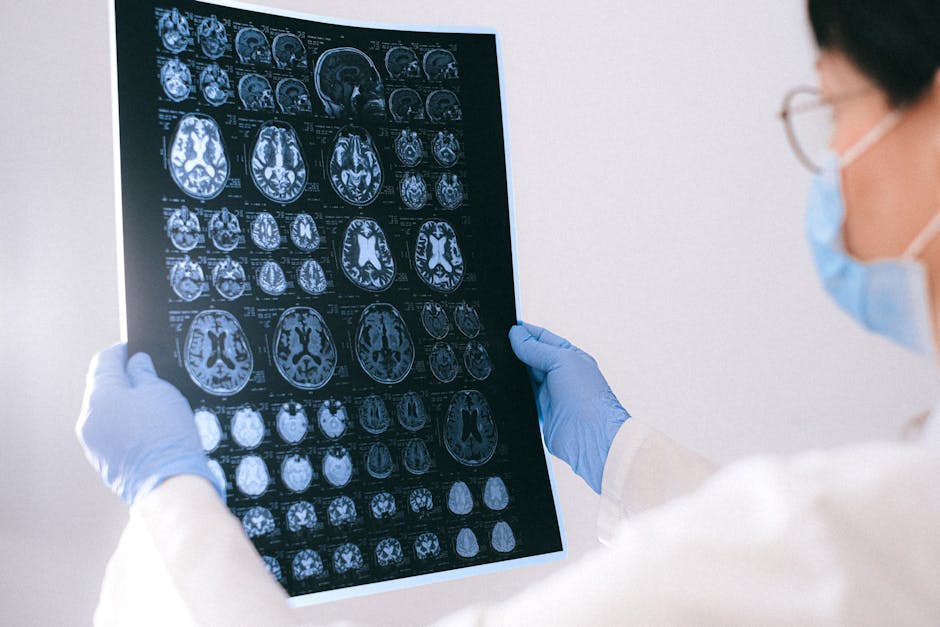
Tag: neuroscience

  • The Neuroscience Wall: Why Laboratory Models Fail Real-World Strategy

    The Neuroscience Wall: Why Laboratory Models Fail Real-World Strategy

    {
    “title”: “The Neuroscience Wall: Why Laboratory Models Fail Real-World Strategy”,
    “meta_description”: “Brain research often collapses when moved from the lab to the wild. Learn why high-performers must question neuro-data to build better operational systems.”,
    “tags”: [“neuroscience”, “decision-making”, “behavioral science”, “operational excellence”, “cognitive bias”, “systems thinking”],
    “categories”: [“Science”, “AI / Neural Networks”],
    “body”: “

    The Reductionist Trap in Modern Cognitive Science

    Most neuroscientific insights suffer from a fatal flaw: they are born in vacuum-sealed environments. When researchers isolate a single neural circuit or cognitive function, they strip away the chaotic, high-stakes variables that define human reality. For leaders, this creates a dangerous illusion of predictability. Relying on laboratory-grade data to drive strategic decision-making often results in fragile systems that collapse the moment they encounter the friction of real-world operations.

    The central challenge is ecological validity. A brain functioning inside an fMRI machine is not the same brain functioning in a high-pressure board meeting or a crisis scenario. When you remove the noise of environmental stressors, social hierarchies, and incomplete information, you are no longer studying the human mind; you are studying a model of a mind that does not actually exist in the wild.

    The Collision of Biological Constraints and Operational Demands

    Our brains evolved for survival in unpredictable, information-poor environments, not for the optimization of spreadsheets or hyper-efficient business operations. This misalignment is the root cause of many failed executive interventions. Standardized tests suggest we are rational actors, yet in the field, neuro-biological fatigue and emotional heuristics routinely override cold logic. High-performers who ignore these biological limits attempt to build systems that require constant, unsustainable willpower.

    Instead of imposing rigid, lab-based protocols on your team, focus on building environments that account for the biological reality of the human nervous system. This requires a shift from viewing the mind as a computer to viewing it as an adaptive, energy-constrained organism. When you refine your mindset to accept that human cognition is inherently messy, you can design workflows that tolerate — and even benefit from — that volatility.

    Artificial Intelligence and the Simulation Gap

    The push to replicate human cognition through artificial intelligence mirrors the same laboratory challenges. We attempt to encode human ‘common sense’ or ’emotional intelligence’ into machines by feeding them massive, clean datasets. However, true expertise is often contextual, implicit, and learned through the very ‘noise’ that data scientists try to scrub from their models. If we build our AI systems to match the precision of a lab study, we inevitably strip them of the intuition required for high-stakes, real-world execution.

    To build better systems at The Boss Mind, we recognize that the gap between laboratory perfection and operational reality is where your competitive advantage lives. Organizations that embrace this gap do not try to eliminate biological variance; they build resilient structures that leverage it.

    From Insight to Execution

    Effective leaders do not wait for the perfect data to arrive. They operate with an understanding that all neuroscientific models are approximations. True high-performance relies on your ability to synthesize disparate, noisy inputs into a coherent action plan. Do not let the false certainty of published studies override your observation of how people actually function in the field. Build your organizational systems around the human as they are, not as the lab papers suggest they should be.


    }

  • The Neuroscience of Learning: A Blueprint for Executive Development

    The Neuroscience of Learning: A Blueprint for Executive Development

    {
    “title”: “The Neuroscience of Learning: A Blueprint for Executive Development”,
    “meta_description”: “Discover how the history of neuroscience is reshaping modern education and corporate training. Learn to apply brain-based strategies to leadership and performance.”,
    “tags”: [“neuroscience”, “executive education”, “cognitive science”, “leadership development”, “brain-based learning”],
    “categories”: [“Education”, “Science”],
    “body”: “

    The Biology of Human Potential

    For decades, the educational establishment treated the brain as a black box—an abstract vessel for information retrieval. Leaders and educators alike operated on the assumption that willpower and repetition were the primary engines of cognitive growth. This approach ignored the structural reality of the human brain: it is a high-cost, high-efficiency biological machine that prioritizes energy conservation and pattern recognition. Understanding the evolution of neuroscience in education is not an academic exercise; it is the foundation for high-performance operations.

    The Shift From Behavioralism to Cognitive Architecture

    Early 20th-century pedagogy relied on B.F. Skinner’s behaviorism, which viewed learning as a series of stimulus-response chains. This model dominated the workforce, creating rigid training systems that emphasized rote memorization. However, the cognitive revolution of the 1960s replaced this mechanical view with a focus on information processing. Researchers began mapping how the brain encodes, stores, and retrieves information. For the modern executive, this is the precursor to effective decision-making frameworks, as it highlights that the brain acts less like a computer hard drive and more like a dynamic, shifting network of associations.

    Neuroplasticity: The Operational Mandate

    The discovery of neuroplasticity—the brain’s ability to reorganize itself by forming new neural connections—shattered the myth that intelligence is fixed by early adulthood. This concept is the cornerstone of strategic growth. In a corporate environment, this means that every high-stakes challenge is a physiological opportunity to rewire cognitive pathways. Leaders who understand that their brain is an adaptable asset rather than a static tool can architect better training systems, focusing on neuro-efficiency rather than long, ineffective hours of practice.

    Translating Brain Science to Execution

    Modern neuroscience emphasizes three critical pillars for optimal functioning: sleep-dependent memory consolidation, interval-based focus, and cognitive load management. History proves that the most successful organizations treat these as operational constraints. When leaders ignore the biological requirements of their teams—such as the necessity for deep work intervals—they suffer from cognitive drift. By integrating these scientific realities into leadership strategies, one can increase team output without increasing burnout, effectively bridging the gap between historical research and current operations.

    Applying Neural Efficiency

    To implement these findings, consider the following:

    • Replace information dumps with iterative, spaced-repetition training cycles.
    • Minimize cognitive load by isolating single variables in problem-solving sessions.
    • Design environments that mitigate executive function depletion throughout the workday.

    For more insights on optimizing human potential within digital-native environments, visit The BossMind Platform.


    }

  • The Neuro-Natural Connection: Cognitive Performance in Nature

    The Neuro-Natural Connection: Cognitive Performance in Nature

    {
    “title”: “The Neuro-Natural Connection: Cognitive Performance in Nature”,
    “meta_description”: “Discover how neuroscience explains the impact of nature on cognitive function. Unlock biological hacks to enhance leadership, strategy, and decision-making clarity.”,
    “tags”: [“neuroscience”, “cognitive performance”, “leadership strategy”, “stress management”, “biophilia”, “mental clarity”],
    “categories”: [“Science”, “Health and Wellness”],
    “body”: “

    The Biology of Cognitive Restoration

    Modern high-performance environments treat the human brain like a CPU, demanding constant, high-wattage throughput. However, the biological architecture of our neural network evolved in complex, non-linear environments. When you isolate yourself in an artificial workspace, you are depriving your prefrontal cortex of the sensory input it requires for optimal calibration. Neuroscience reveals that exposure to natural environments is not merely a break; it is a critical requirement for maintaining the executive functions necessary for effective leadership.

    Attention Restoration Theory (ART) posits that urban environments demand intense, directed attention that leads to rapid cognitive fatigue. In contrast, nature provides ‘soft fascination’—stimuli that hold our attention without requiring the cognitive effort associated with deliberate concentration. This allows your internal systems to reallocate resources away from the amygdala and back toward the executive control centers of the brain.

    Rewiring the Executive Function

    When you detach from digital interfaces and engage with natural patterns—fractals, irregular movement, and organic soundscapes—you initiate a measurable shift in your mindset. Studies utilizing fMRI data show reduced activity in the subgenual prefrontal cortex, an area of the brain associated with the repetitive, negative rumination that often compromises professional decision-making.

    For the operator, this is a distinct competitive advantage. By architecting your routine to include ‘green time,’ you are essentially performing a system reset. You are clearing the buffer of unresolved cognitive tasks, allowing for higher-level synthesis and long-term strategy formation that is impossible to achieve in a state of chronic mental depletion.

    Systems Design for Peak Mental Output

    Integrating the restorative power of nature into your operational cadence does not require a retreat to the wilderness. It requires an understanding of your own neural requirements. Consider the concept of environmental variability; just as you might optimize your operations to eliminate bottlenecks, you must audit your environment to ensure it supports, rather than taxes, your nervous system.

    High-performers who treat their cognitive state as an asset to be managed—rather than an inexhaustible resource—tend to perform at higher levels for longer durations. Visit The BossMind to understand how your environment influences your output. By consciously shifting your work context to include natural elements, you are engaging in a form of neuro-optimization that stabilizes your capacity for deep, focused work, ensuring you remain effective when the stakes are at their highest.

    Applying Neuro-Natural Principles

    • Utilize low-arousal environments for high-stakes problem solving to prevent cognitive tunnel vision.
    • Schedule high-intensity strategy work during windows of circadian peak, followed by direct exposure to natural light to reset cortisol rhythms.
    • Incorporate visual fractals into your physical workspace to reduce the cognitive cost of ‘directed attention.’


    }

  • The Strategic Biology of Dreams: Decoding Your Brain at Rest

    The Strategic Biology of Dreams: Decoding Your Brain at Rest

    {
    “title”: “The Strategic Biology of Dreams: Decoding Your Brain at Rest”,
    “meta_description”: “Explore the evolution of dream science and how high-performers use nocturnal cognitive processing to refine decision-making and operational clarity.”,
    “tags”: [“neuroscience”, “sleep architecture”, “cognitive performance”, “decision-making”, “brain health”, “productivity systems”],
    “categories”: [“Health and Wellness”, “Science”],
    “body”: “

    The Forgotten Operating System

    For centuries, human culture treated dreams as ethereal messages or mystical premonitions. We relegated them to the domain of the psyche and the supernatural. Modern neuroscience, however, has stripped away the mysticism to reveal a far more pragmatic reality: dreaming is a critical data-processing operation. For the leader or operator, sleep is not merely downtime; it is the most sophisticated defragmentation and pattern-recognition cycle your brain performs.

    Understanding the history of dream science is not just an academic exercise. It is a strategic necessity for anyone managing high-stakes information loads. When you ignore the biological necessity of REM-stage dreaming, you are effectively operating a high-performance engine without performing system updates.

    From Oracles to Neural Networks

    Early civilizations viewed dreams through a framework of divine intervention. The Greeks built incubation temples, while the Egyptians interpreted nocturnal visions as literal warnings. It was not until the 19th and 20th centuries that the shift toward internal biology began. Sigmund Freud and Carl Jung popularized the idea of the subconscious as a vault, but they lacked the imaging technology to prove the mechanism.

    The breakthrough arrived in 1953 with the discovery of Rapid Eye Movement (REM) sleep. Suddenly, the phenomenon of dreaming was measurable. Researchers identified that during REM, the brain’s electrical activity mirrors wakefulness. This suggests that the brain is not shutting down; it is remapping connections. If you find your decision-making capabilities stalling, you are likely failing to cycle through these necessary neurological restructures.

    The Operational Function of Sleep

    Modern studies clarify that dreaming is a form of off-line memory consolidation. Throughout the day, your brain accumulates vast amounts of raw data. The REM stage serves as the sorting facility, where the brain integrates new information with existing mental models. This is where you develop the intuition that seasoned operators rely on.

    This process is the biological equivalent of systems optimization. Without adequate time for the brain to move information from short-term memory to long-term storage, your cognitive bandwidth suffers. A failure to dream is a failure to store the lessons of your daily work, leading to stagnant performance and repetitive errors.

    Leveraging Cognitive Restructuring

    High-performers who treat their sleep architecture as a professional asset gain a distinct edge in complex environments. When you prioritize the conditions that allow for complete REM cycles, you are effectively training your mind to identify patterns that others miss. This is the bedrock of performance—the ability to connect seemingly unrelated data points to solve problems before they reach a crisis point.

    You can optimize your nocturnal output by treating sleep hygiene with the same rigor you apply to your operations manual. Consistent schedules and the elimination of pre-sleep stimulants allow the brain to reach REM stages efficiently, ensuring that your ‘system update’ completes before the alarm rings. Visit The BossMind to see how elite operators structure their workflows to accommodate these biological imperatives.

    The Future of Dream Research

    As we move deeper into the era of human-machine interaction, the study of the brain’s sleeping state becomes even more relevant. Researchers are currently looking at how artificial intelligence might eventually mirror these biological processes to improve machine learning stability. The gap between biological dreaming and synthetic data consolidation is closing, and understanding our own biology remains the primary competitive advantage for the organic operator.


    }

  • The Architecture of Dreams: Redefining Education for High Performance

    The Architecture of Dreams: Redefining Education for High Performance

    The Cognitive Frontier of Pedagogy

    Modern education obsesses over the waking state: the lecture, the sprint, the quantifiable output. Yet, the most significant cognitive leaps often occur when the brain is untethered from external stimuli. We treat sleep as a recovery phase, a mere prerequisite for biological maintenance. For the high-performer, however, the dream state is an underutilized laboratory for subconscious data synthesis. Integrating the architecture of dreams into formal learning isn’t mysticism; it is an exercise in designing systems that maximize neurological output.

    The Neurobiology of Strategic Synthesis

    Dreams serve as the brain’s primary environment for pattern recognition and non-linear problem solving. During REM sleep, the prefrontal cortex—the seat of executive function—quiets, allowing the associative networks of the brain to connect disparate nodes of information. This is where complex decision-making finds its resolution. When students are taught to view their subconscious as an active component of their cognitive stack, they transform from passive consumers of information into architects of their own intellectual development.

    Operationalizing this requires shifting from rote memorization to reflective incubation. Traditional curricula emphasize intensity; high-performance pedagogy must prioritize the rhythm of engagement and withdrawal. By aligning learning sprints with deliberate, structured downtime, institutions can foster a state of sustained clarity that pure academic rigor cannot replicate.

    Reframing Constraints as Catalysts

    The transition toward AI-augmented learning environments necessitates a return to human-centric cognitive endurance. As machines handle rote synthesis, the premium on original thought increases. Education must evolve to train the mind to handle high-level abstraction. This involves treating the brain not as a hard drive to be filled, but as a mental framework that requires consistent calibration. When we ignore the role of the dream state in long-term retention and creative breakthrough, we discard our most effective asset for long-range vision.

    The Operational Takeaway

    Leaders and high-performers understand that output is a function of input quality. For students, the “input” includes the psychological environment in which they process information. Implementing a curriculum that treats sleep hygiene and subconscious incubation as core competencies allows for the development of greater mental performance. Educators should focus on the “after-action review” of dreams, encouraging students to log and analyze the patterns that emerge from their subconscious during periods of intense study.

    Building for the Future

    The organizations that dominate the next decade will be those that effectively blend artificial intelligence with human cognitive depth. We must move beyond the assembly-line model of schooling. By integrating the mechanics of subconscious processing into the core of how we teach, we provide the next generation with the tools to handle the ambiguity of the future. The goal of education is not the completion of a degree; it is the mastery of one’s own consciousness. Visit The BossMind to explore further frameworks for elite cognitive operations.

  • Neuroscience Frontiers: Transforming Scientific Strategy and Execution

    Neuroscience Frontiers: Transforming Scientific Strategy and Execution

    {
    “title”: “Neuroscience Frontiers: Transforming Scientific Strategy and Execution”,
    “meta_description”: “Discover how neuroscience is revolutionizing scientific research and operational decision-making. Learn to apply cognitive insights to accelerate discovery.”,
    “tags”: [“neuroscience”, “scientific research”, “high performance thinking”, “cognitive strategy”, “research operations”],
    “categories”: [“Science”, “AI / Neural Networks”],
    “body”: “

    The Cognitive Bottleneck in Scientific Discovery

    Scientific progress has historically been limited by the biological constraints of the human brain. While computational power has scaled exponentially, the cognitive architecture required to synthesize vast, multi-dimensional datasets remains anchored to evolutionary defaults. Modern neuroscience is shifting this paradigm, offering a blueprint to augment research output by optimizing how scientists process information, detect patterns, and structure their internal decision-making frameworks.

    We are no longer merely observing neurons; we are reverse-engineering the mechanics of insight. For the high-performing research leader, the opportunity lies in transitioning from trial-and-error methodologies to a neuro-informed approach that prioritizes cognitive efficiency over raw hours logged in the lab.

    Mapping Neural Architecture to Research Operations

    Operational excellence in science requires more than robust equipment; it demands a deep understanding of cognitive load management. Neuroscience provides actionable data on how the brain maintains focus during long-duration analytical tasks. By applying the principles of neuroplasticity, research teams can implement specific productivity protocols that reduce the ‘switching cost’ associated with multitasking, which is often the silent killer of complex scientific breakthroughs.

    The integration of artificial intelligence into these workflows creates a symbiotic relationship. When researchers offload pattern recognition tasks to neural-inspired AI architectures, they free up the prefrontal cortex for high-level synthesis and hypothesis generation. This division of labor is the hallmark of modern, agile research environments.

    Neuro-Enhanced Decision Architectures

    Cognitive bias remains the single greatest impediment to objective scientific analysis. By understanding the neurobiology of confirmation bias and the sunk-cost fallacy, leaders can build internal systems designed to force disconfirming evidence to the surface. This is not merely an exercise in mindfulness; it is a strategic requirement for anyone managing high-stakes research programs where a single miscalculation can compromise years of effort.

    High-performers who actively mitigate these biological biases gain a significant competitive edge. They are able to pivot faster when data contradicts the prevailing hypothesis, effectively shortening the execution cycle. At The BossMind, we argue that the most successful scientists of the next decade will be those who master the operating system of their own minds as rigorously as they master their field of study.

    The Future of Integrative Research

    The convergence of neuroscience and data science is democratizing the ability to generate rapid insights. As we develop more sophisticated brain-computer interfaces and neuro-feedback loops, the speed at which a research organization can iterate will be dictated by how quickly it adopts these human-performance optimizations. This is the next frontier of leadership in the hard sciences: building teams that are as cognitively optimized as the software and machinery they utilize.

    This evolution requires a shift away from traditional, siloed research structures toward an integrated model where cognitive health is treated as a core performance metric. By aligning scientific methodology with the innate strengths of the human brain, we unlock potential that was previously inaccessible through standard management practices.


    }

  • The Neuro-Architecture of Addiction in the Age of AI

    The Neuro-Architecture of Addiction in the Age of AI

    {
    “title”: “The Neuro-Architecture of Addiction in the Age of AI”,
    “meta_description”: “As technology creates more precise feedback loops, leaders must recognize the ethical risks of addictive design in shaping human behavior and long-term decision-making.”,
    “tags”: [“neuroscience”, “behavioral economics”, “tech ethics”, “human performance”, “decision theory”],
    “categories”: [“AI / Neural Networks”, “Technology”],
    “body”: “

    The Asymmetry of Attention

    Modern product architecture is not merely about user experience; it is an exercise in biological hacking. By conditioning behavior through variable reward schedules, platforms have effectively weaponized the human dopamine system. For the high-performer, this presents a critical threat to performance. When our tools are designed to bypass the prefrontal cortex—the seat of rational decision-making—we lose our agency to define our own priorities.

    The Feedback Loop as a Competitive Weapon

    The core of the issue lies in the operationalization of neurobiology. Algorithms now operate with a predictive precision that outstrips individual willpower. This is not a failure of character; it is a mismatch between evolutionary biology and 21st-century systems. In a professional context, if a tool optimizes for time-on-site rather than task completion, it is not serving the user; it is harvesting their cognitive surplus. Leaders must recognize that true efficiency requires the decoupling of attention from these addictive feedback loops.

    Defining the Boundary of Ethical Design

    Design teams often conflate engagement with value. However, the ethical divide emerges when the mechanism of engagement relies on the user’s inability to exit. A strategy built on compulsion is inherently fragile because it creates a workforce of addicts rather than collaborators. Developing a culture of high decision-making standards requires intentional friction. We must reintroduce latency into our digital workflows to force deliberate, rather than reflexive, engagement.

    Operationalizing Autonomy

    Restoring cognitive sovereignty begins with identifying where technology shifts from a force multiplier to a dependency. We must audit our tech stack for predatory engagement models. If a tool requires constant interaction to provide value, it is likely an extraction engine. Leaders should prioritize platforms that support deep work and asynchronous communication, moving away from the constant notification paradigm that defines modern digital decay. Referencing the principles at The BossMind, operational excellence is defined by the ability to remain focused on high-leverage outcomes, not by the density of one’s digital interactions.

    The Cost of Compulsion

    In the coming era of AI-driven interfaces, the risk of addiction will scale exponentially. As models become hyper-personalized, they will cater to individual neuro-chemical weaknesses with surgical accuracy. This necessitates a new framework for mindset. Leaders who ignore the bio-ethical implications of these technologies will find their organizations suffering from degraded analytical capacity and a erosion of long-term vision. Strategy in this environment is less about market capture and more about guarding the cognitive health of the humans executing the mission.


    }

  • Self-Evolving AI: Architecting Autonomous Bioelectronic Systems

    {
    “title”: “Self-Evolving AI: Architecting Autonomous Bioelectronic Systems”,
    “meta_description”: “Move beyond static algorithms. Learn how self-evolving theory of mind architectures are driving precision outcomes in bioelectronic medicine and hardware.”,
    “tags”: [“AI architecture”, “bioelectronics”, “autonomous systems”, “machine learning”, “neurotechnology”, “predictive modeling”],
    “categories”: [“AI”, “Operations”],
    “body”: “

    The Shift from Reactive to Autonomous Bio-Sensing

    Most bioelectronic systems today function as sophisticated thermometers. They monitor physiological signals, translate them into binary data, and wait for human intervention. This reactive loop is the primary bottleneck in medical hardware performance. To achieve real-world clinical efficacy, we must move toward a self-evolving theory of mind (ToM) architecture—a framework where the AI does not merely interpret data, but models the biological state as a dynamic, intentional agent.

    By integrating a ToM framework, the AI begins to predict the ‘intent’ of biological systems, such as neural firing patterns or metabolic shifts. This shifts the operational focus from data collection to predictive intervention. When your system understands the underlying state of the biological host, it transitions from a diagnostic tool to a closed-loop systems integrator capable of preemptive adjustment.

    Operationalizing Self-Evolution in Hardware

    A self-evolving ToM is not a static neural network; it is a recursive feedback loop. In bioelectronics, this requires an architecture that can update its own weights based on longitudinal patient outcomes rather than just training data. This is how you move from prototype to performance-driven product.

    Defining the Meta-Cognitive Layer

    The core of a self-evolving system is the meta-cognitive layer. This layer monitors the gap between the AI’s current prediction and the actual biological output. If the error margin exceeds a defined threshold, the system triggers a self-correction cycle. This is not ‘learning’ in the sense of adding more layers; it is structural adaptation. For the engineer, this means building hardware that supports dynamic memory allocation to store these adaptive models without requiring a hard reset or cloud-based retraining.

    Closing the Loop with Predictive Synthesis

    True autonomy occurs when the AI can simulate potential biological responses to its own stimulation. If a bioelectronic implant applies an electrical pulse, a ToM-enabled AI simulates the expected tissue reaction. If the result deviates, the system updates its internal model of that specific user’s neurobiology. This is the difference between a generic device and a bespoke medical solution that refines its own strategy over time.

    Results: Moving Beyond the Proof of Concept

    Implementing self-evolving architectures demands a shift in how teams approach execution. You are no longer shipping a fixed product; you are deploying a platform that matures in the field. This necessitates rigorous version control for the AI’s ‘belief state’—the internal model it holds about the biological host. Without this, you risk ‘drift,’ where the device becomes hyper-specialized to the point of clinical instability.

    The measurable success of this approach is found in reduced latency between signal detection and corrective output. By offloading the decision-making to the edge—directly on the device—you eliminate the overhead associated with external data processing. This is the foundation of high-stakes decision-making in medical hardware.

    The Future of Bioelectronic Integration

    The convergence of TheBossMind‘s principles on operational excellence and high-end bioelectronics requires a departure from traditional software development cycles. You are building entities that function in the messy, non-linear reality of the human body. The goal is not just a device that works, but a device that learns to work better with every pulse, every spike, and every error. Explore our full suite of resources at TheBossMind Network to understand how these frameworks apply to your broader technical roadmap. For those looking to source the necessary components to build these autonomous systems, visit TheBossMind Store for curated hardware insights, and stay informed on industry shifts via TheBossMind Info portal.


    }