Tag: operational excellence

  • The Future of Leadership: Why Spirituality is the New Strategic Edge

    The Future of Leadership: Why Spirituality is the New Strategic Edge

    {
    “title”: “The Future of Leadership: Why Spirituality is the New Strategic Edge”,
    “meta_description”: “True leadership is moving beyond mere KPIs. Discover why integrating spiritual intelligence into your operational framework is the next evolution of performance.”,
    “tags”: [“leadership development”, “spiritual intelligence”, “strategic thinking”, “executive mindset”, “conscious leadership”, “operational excellence”],
    “categories”: [“Business”, “Self Help”],
    “body”: “

    The Architecture of Authentic Command

    Modern management has reached the limits of rationalism. When every variable is quantified and every process is automated, the competitive edge shifts from analytical capacity to something more elusive: the internal state of the leader. Spirituality in this context is not a retreat from the world; it is the ultimate tool for signal detection in an era of extreme noise. It is the practice of maintaining equilibrium while executing complex strategy under conditions of radical uncertainty.

    Leaders who rely solely on legacy systems are finding themselves paralyzed by the paradox of choice. They have the data, yet they lack the grounding to synthesize it into coherent action. The future of leadership belongs to those who view their own consciousness as the primary operational asset.

    Transcending the Data-Driven Delusion

    The obsession with metrics often creates a feedback loop that rewards short-term metrics at the expense of systemic health. A leader rooted in spiritual intelligence recognizes that performance is a downstream result of cultural and individual alignment. When you understand the deeper mechanics of human motivation and focus, you cease to be a manager of numbers and become an architect of outcomes.

    This shift requires a rigorous commitment to decision-making that acknowledges the presence of unconscious bias and ego. Most executive failures are not failures of information, but failures of internal clarity. By applying meditative rigor to the decision-making process, leaders can peel back layers of reactive impulse to reach the strategic objective.

    Operationalizing Awareness

    Spiritual intelligence provides a framework for emotional regulation that high-pressure environments demand. It is the ability to decouple your identity from the volatility of market shifts. In performance coaching, this is often described as the state of flow, but it is actually a discipline of detachment. When a leader is not tethered to their own ego, they can pivot without personal friction. This is the ultimate form of agility.

    Organizations led by such individuals tend to exhibit higher levels of psychological safety and cognitive diversity. Because the leader is not using the company to validate their self-worth, they allow space for truth to rise to the surface. Information flows faster in environments where the leader does not punish dissent, and that speed of communication is a tangible competitive advantage. Visit thebossmind.online to explore how these principles translate into tangible management methodologies.

    The Synthesis of Tech and Inner Work

    We are entering a phase where the deployment of AI in the workplace will force humans to move further up the value chain. As machines handle logic, pattern recognition, and rote tasks, the human operator must specialize in wisdom, ethical discernment, and the cultivation of vision. These are spiritual domains. The leader of the future will be part technician, part philosopher.

    If your current leadership model fails to account for the internal state of your team, you are ignoring 50% of your operational reality. For more insights on building high-performance cultures, visit thebossmind.com and study the core pillars of our editorial philosophy.


    }

  • Renewable Energy Strategy: Operationalizing Societal Transition

    Renewable Energy Strategy: Operationalizing Societal Transition

    {
    “title”: “Renewable Energy Strategy: Operationalizing Societal Transition”,
    “meta_description”: “Beyond the headlines, renewable energy is a massive operational shift. Leaders must balance legacy infrastructure with the realities of modern energy deployment.”,
    “tags”: [“renewable energy”, “energy infrastructure”, “strategic leadership”, “operational excellence”, “energy policy”],
    “categories”: [“Business”, “Science”],
    “body”: “

    The Decoupling of Energy and Entropy

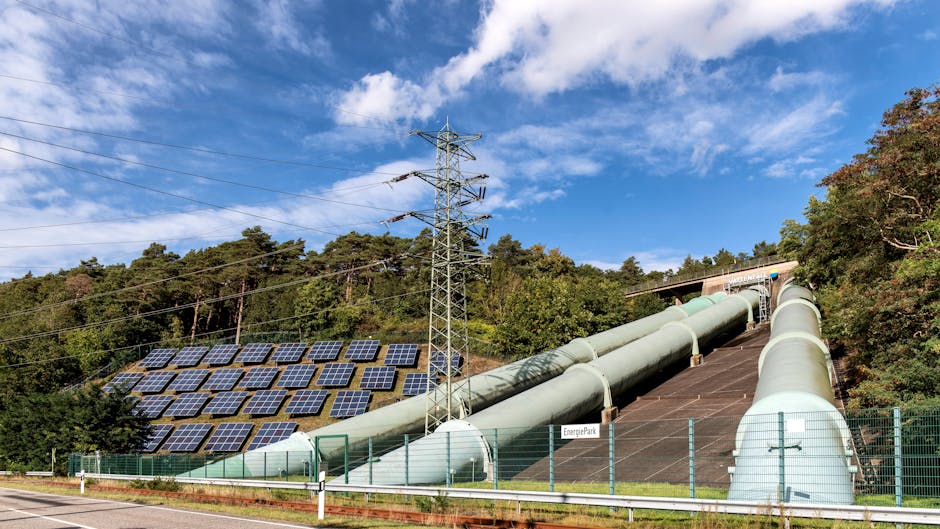
    Energy transition is not merely a technical migration from hydrocarbons to electrons. It is the most significant operational overhaul of global civilization since the Industrial Revolution. For the modern leader, the shift to renewable energy represents a fundamental change in how resources are allocated, processed, and maintained. The transition creates a new friction between legacy infrastructure and the modular, decentralized nature of modern generation.

    The Operational Reality of Intermittency

    In traditional grid management, supply is a choice, not a variable. Leaders in the energy sector operated under a model where output matched demand with surgical precision. Renewables introduce stochastic variables that break this predictability. This shift necessitates a new approach to systems thinking. Efficiency is no longer defined by how much energy you produce, but by how effectively you capture, store, and distribute that energy when the environment dictates.

    Organizations that ignore these volatility constraints fail to integrate renewable components successfully. This is why informed decision-making requires a departure from legacy centralized models. Firms must prioritize resiliency over absolute output, ensuring that the architecture can withstand shifts in supply without collapsing operational continuity.

    Strategy and the Decentralization Paradox

    The core challenge of renewable energy is decentralization. When power generation moves from a single utility plant to millions of localized points, the role of management changes. This mirrors the transformation seen in digital architecture where monolithic servers gave way to cloud-native, distributed networks. Successful implementation of renewable mandates requires a cohesive strategy that bridges the gap between local capability and grid stability.

    Leaders must acknowledge that renewable energy is not just a climate objective; it is a logistical challenge. Scaling these operations requires a mastery of data and real-time monitoring. Without high-fidelity feedback loops, the risk of systemic failure increases. We see similar patterns in advanced industrial operations, where distributed sensors manage thousands of variables to maintain a specific standard of output.

    Human Capital in a Transition Economy

    Societal friction stems from the mismatch between existing labor skill sets and future energy needs. The transition requires a massive, coordinated effort in upskilling and infrastructure modernization. For organizations operating in this space, building the right team is the primary bottleneck. True high-performance culture during this transition involves aligning incentives with the long-term realities of energy sustainability rather than short-term political cycles.

    Visit The Boss Mind for further insights on how leaders can adapt to shifting macro-environments. For deep-dive technical analysis on grid load balancing, you can review current developments at The Boss Mind Information Portal.


    }

  • The Behavioral Economics of Environmental Impact: A Leadership Mandate

    The Behavioral Economics of Environmental Impact: A Leadership Mandate

    {
    “title”: “The Behavioral Economics of Environmental Impact: A Leadership Mandate”,
    “meta_description”: “Environmental impact is a function of cognitive bias and organizational design. Learn how high-performers shift behavior to align long-term sustainability.”,
    “tags”: [“behavioral economics”, “operational excellence”, “environmental strategy”, “decision making”, “organizational culture”, “leadership”],
    “categories”: [“Business”, “Science”],
    “body”: “

    The Architectures of Waste

    Environmental degradation is not merely a technical failure; it is an output of systemic human behavior. Leaders often treat ecological impact as an externality, yet it remains the ultimate metric of operational inefficiency. When resources are squandered, energy is leaked, and material flows are linear rather than circular, the organization reveals a fundamental flaw in its decision-making framework. High-performance operators understand that environmental footprint is a direct proxy for wasted potential and poor operations.

    The Psychology of Short-Termism

    Human decision-making is hardwired for immediate gratification, often at the expense of long-term equilibrium. This cognitive limitation prevents teams from investing in sustainable infrastructure, favoring the quick win over the enduring system. In a corporate context, this manifests as the quarterly profit trap. If your strategy prioritizes short-term metrics while ignoring resource lifecycle, you are incentivizing long-term environmental and fiscal decay. Behavioral correction requires shifting the incentive structure so that sustainable choices are the path of least resistance for the individual actor.

    Default Bias in Operational Design

    Choice architecture dictates the environmental outcome of any firm. If the default setting for a supply chain is to source from the cheapest, most opaque vendor, that is exactly what your managers will do. By altering the defaults—mandating high-transparency vendors or setting rigorous waste-reduction targets as KPIs—leaders effectively change behavior without needing to change the mindset of every employee. This is how you implement execution that scales sustainability.

    Aligning Performance with Planetary Boundaries

    True competitive advantage comes from decoupling growth from resource intensity. This transition requires a shift in mindset: viewing the environment as an asset class to be managed rather than an external cost to be offloaded. Organizations that fail to account for their environmental impact will inevitably face systemic shocks, from supply chain volatility to regulatory intervention. Leaders must internalize these costs early to maintain a performance edge over competitors who remain reactive.

    The Role of Data and AI

    Leveraging AI to map resource flows provides the transparency necessary to eliminate waste. When you gain granular insight into where energy and material are lost, you move from reactive mitigation to proactive optimization. This is no longer a matter of corporate social responsibility; it is an exercise in data-driven decision-making designed to harden your operations against future instability. Visit thebossmind.com to explore how advanced systems thinking can streamline your organizational footprint.


    }

  • Renewable Energy: A Strategic History of Power and Industrial Scaling

    Renewable Energy: A Strategic History of Power and Industrial Scaling

    {
    “title”: “Renewable Energy: A Strategic History of Power and Industrial Scaling”,
    “meta_description”: “Explore the evolution of renewable energy through the lens of industrial strategy. Understand how systemic shifts define modern leadership and operations.”,
    “tags”: [“renewable energy history”, “industrial strategy”, “energy transition”, “operational excellence”, “systemic shift”, “energy systems”],
    “categories”: [“History”, “Business”],
    “body”: “

    The Primitive Foundations of Kinetic Control

    Energy history is not merely a tale of environmental discovery; it is a record of human systems evolving to capture increasingly dense sources of power. Long before the combustion engine defined the 20th century, early civilizations operated on pure renewable input. Water wheels, windmills, and biomass represented the first attempts at scaling production beyond manual labor. For the early operator, the challenge was simple: proximity to a constant force. This constraint dictated the geography of industry, forcing mills and factories to cluster around riverbanks and windy plains. It was a period where geography was destiny, and the primary strategy for growth involved securing high-output physical locations.

    The Carbon Interruption

    The industrial revolution introduced a shift in operational capability by decoupling production from immediate, site-specific renewable sources. Coal and petroleum allowed for massive portability. Leaders no longer needed to be near the river; they could build anywhere, provided they had an supply chain for fuel. This era institutionalized a reliance on extraction, creating legacy systems that now pose significant friction for modern operations. The reliance on fossil fuels became an architectural constraint, baked into the infrastructure of global cities and supply chains.

    Renewables as a Systems Overhaul

    We are currently experiencing a return to distributed power, but with one critical distinction: advanced technology. The transition to solar, wind, and geothermal is not just an environmental imperative; it is an exercise in complex systems engineering. For the modern leader, the return to renewables involves managing the intermittent nature of power delivery, requiring a high degree of precision in energy storage and grid integration. This is no longer about simple extraction, but about the sophisticated management of flow and throughput.

    Operational Implications for the Modern Leader

    High-performance thinking now demands a rethink of energy dependency. Organizations that integrate autonomous energy production are creating a hedge against volatility in the broader utility market. This is a move toward decentralization, reflecting broader trends in leadership where control is shifted from the center to the edge. When a company controls its own power generation, it builds a layer of resiliency that centralized power structures cannot replicate. This is the new frontier of operational excellence—minimizing reliance on fragile, legacy grids in favor of robust, local energy matrices.

    The AI Synergy

    Managing the grid of the future is an impossible task for human operators alone. The integration of AI in managing energy consumption patterns is the ultimate force multiplier. By predicting output fluctuations in solar or wind, machine learning models allow for real-time adjustments that optimize cost and uptime. Leaders who fail to see the nexus between energy management and digital transformation will find their overhead costs inflating as their competitors adopt smarter, AI-driven power strategies.

    Explore more insights on structural growth at The BossMind platform.


    }

  • Consciousness as Strategy: Why Awareness is the New Competitive Edge

    Consciousness as Strategy: Why Awareness is the New Competitive Edge

    {
    “title”: “Consciousness as Strategy: Why Awareness is the New Competitive Edge”,
    “meta_description”: “Consciousness is no longer a soft skill; it is a high-performance operating system. Learn how to turn cultural shifts into strategic execution advantages.”,
    “tags”: [“high performance”, “strategic leadership”, “conscious business”, “operational excellence”, “organizational culture”, “decision science”],
    “categories”: [“Business”, “Self Help”],
    “body”: “

    The Emergence of High-Resolution Leadership

    Most corporate strategies fail not because of poor resource allocation, but because of a collective inability to perceive the reality of the present moment. Organizations often operate as closed feedback loops, reacting to historical data rather than the current cultural consciousness. Leaders who master the ability to observe their environment with high resolution—what we define here as organizational consciousness—gain an asymmetric advantage in market anticipation and team cohesion.

    Developing this awareness requires moving beyond traditional leadership paradigms. It involves training the mind to process complex information without the static of ego or historical bias. This is the difference between reactive management and proactive architectural control over your business environment.

    Aligning Operational Systems with Collective Intent

    Consciousness in culture is the invisible infrastructure of an organization. When employees understand the deeper purpose of their labor, execution shifts from a transactional requirement to an intentional output. Leaders who fail to cultivate this alignment leave massive amounts of latent productivity on the table.

    To build this, you must treat your cultural feedback loops with the same rigor you apply to your operations. When information flows transparently and without the distortion of political silos, the collective intelligence of the firm increases exponentially. This allows for faster pivots and more accurate decision-making during periods of extreme volatility.

    The AI Interface and Cognitive Leverage

    We are entering an era where human consciousness is increasingly augmented by synthetic systems. Integrating AI into your workflow is not just about automation; it is about extending your cognitive reach. By offloading repetitive analytical tasks, high-performers can direct their conscious attention toward high-leverage strategic problems that remain inaccessible to algorithms.

    At The BossMind, we observe that the most effective operators are those who refuse to confuse data processing with deep thought. Your competitive edge is no longer how fast you can crunch numbers, but how clearly you can discern the signal within the noise of an hyper-connected world.

    Cultivating Institutional Awareness

    Building a resilient organization necessitates a deliberate culture of inquiry. You must incentivize the discomfort of radical truth-telling, even when it challenges current strategy. A rigid structure may provide short-term stability, but it creates a fragile system that inevitably shatters under the pressure of cultural shifts.

    Consciousness is the ability to see the system you are embedded in, without being entirely consumed by its existing patterns.

    By fostering a culture that prioritizes awareness, you create a baseline for performance that is self-correcting. When the individual units of your organization possess a high degree of situational awareness, the need for top-down micromanagement evaporates, giving way to autonomous excellence.


    }

  • The True Cost of Success: How High-Performance Shapes Society

    The True Cost of Success: How High-Performance Shapes Society

    {
    “title”: “The True Cost of Success: How High-Performance Shapes Society”,
    “meta_description”: “Success creates structural ripples that extend far beyond personal wealth. Discover how individual achievement dictates societal norms and operational standards.”,
    “tags”: [“leadership strategy”, “societal impact”, “high performance”, “systemic influence”, “operational excellence”],
    “categories”: [“Business”, “Education”],
    “body”: “

    The Asymmetric Ripple Effect of Achievement

    Success is not a private outcome. Every high-performance breakthrough, whether a new architectural system for business or a refined decision-making framework, functions as an unsolicited tax on the status quo. When an individual or entity hits a new tier of output, they raise the floor of expectation for their entire sector. Society does not merely observe success; it consumes it, internalizing these new benchmarks until they become the minimum requirements for participation.

    This phenomenon forces a shift in collective behavior. When top-tier operators demonstrate that rapid scaling is possible through advanced operations, the market ceases to tolerate laggards. The resulting societal pressure is often ignored by the individual achiever, but it serves as the primary engine for collective advancement—or, conversely, the catalyst for systemic burnout.

    The Architecture of Influence

    High-performers operate as architects of social reality. Through the application of specialized knowledge, these leaders define what is considered possible. This is most visible in the rapid adoption of new AI workflows. A leader who effectively integrates machine intelligence doesn’t just gain a competitive edge; they fundamentally alter the labor expectations of their industry. Colleagues and competitors are forced to adapt or face obsolescence.

    This shift illustrates the concept of cascading utility. The personal drive of one individual creates a positive externality—a faster, more efficient marketplace—but it also creates a negative externality by eroding the breathing room for those unable to keep pace. Understanding this dynamic is critical for leaders who wish to scale their impact without destabilizing the ecosystem they inhabit.

    Systemic Performance and Societal Debt

    True leadership requires acknowledging the burden of success. If an organization achieves radical efficiency, the society surrounding it eventually demands that same performance from all other actors. This is the ‘Red Queen’ effect: you must run twice as fast just to stay in the same place. Leaders must recognize that their internal mindset and output are not just personal assets but contributors to the societal baseline.

    Those who lead with high-performance metrics must also manage the externalities of their success. By investing in mentorship, open-source knowledge sharing, and transparent methodologies, leaders can mitigate the instability caused by their rapid acceleration. For a deeper look at these organizational structures, visit The BossMind Network to view how professional communities are standardizing excellence to prevent systemic collapse.

    Operationalizing Future Trends

    The trajectory of success in the coming decade will be defined by the ability to balance individual ambition with long-term societal sustainability. We are moving away from an era of unchecked growth toward one of strategic optimization. Organizations that fail to account for the impact of their success will find themselves isolated, as the demand for ethical, sustainable, and transparent high-performance becomes the next societal mandate.


    }

  • The Education System is Failing Leaders: A Strategic Reassessment

    The Education System is Failing Leaders: A Strategic Reassessment

    The Obsolescence of Industrial Pedagogy

    The modern education system was never engineered to produce visionaries or autonomous operators. It was built to satisfy the labor demands of the 19th century: factory-floor compliance, standardized output, and predictable, linear task execution. For the contemporary leader, this creates a dangerous structural friction. We are trained to operate within rigid rubrics, yet the current landscape rewards those who can identify gaps in broken systems and invent new operating models.

    High-performance thinking requires a departure from the “correct answer” bias that schools instill. When you move into a position of strategic leadership, you discover that the most impactful problems have no rubric. They require original synthesis, not rote recall. The educational focus on memorization rather than cognitive agility represents a fundamental bottleneck for anyone aspiring to build long-term enterprise value.

    The Cost of Standardized Decision-Making

    Academic structures reward the minimization of risk through adherence to established procedures. However, effective decision-making in the wild demands the opposite. Leaders must understand how to manage uncertainty, calculate asymmetric risk, and deploy capital effectively. When the primary goal of your training has been to avoid errors, you become psychologically ill-equipped to embrace the calculated failures necessary for rapid innovation.

    We see this inefficiency manifest in middle management, where the reliance on legacy processes prevents the adoption of modern operations. Organizations that prioritize internal academic credentials over demonstrable output frequently experience stagnation. They treat the office like a classroom, expecting rewards for following instructions rather than for producing tangible results.

    Rebuilding the Cognitive Stack

    To transcend the limitations of traditional schooling, one must actively cultivate a new intellectual foundation. This involves treating your mind as a platform that requires constant upgrades. Start by shifting your focus from consumption to synthesis. Rather than just processing information, identify the underlying logic that drives successful strategy execution.

    For those looking to deepen their intellectual edge, consider how The BossMind network approaches the intersection of systems theory and human potential. It is not about knowing more; it is about knowing how to parse, refine, and apply data to move the needle on key objectives. You must unlearn the passive reception of information and shift toward an aggressive, inquiry-based approach to growth.

    The Future of High-Performance Skill Acquisition

    Future-proofing your career requires an acknowledgment that formal institutions are often trailing, not leading, the curve of innovation. The most critical skills—such as resource allocation, team orchestration, and the utilization of AI as a leverage point—are rarely taught in academic settings. They are developed on the front lines of commerce and creative risk-taking.

    The role of education is shifting from a static phase of life to a continuous, self-directed process. If you want to remain relevant, you must curate your own curriculum, seeking out masters rather than instructors. This is the hallmark of the high-performance mindset: the realization that your professional trajectory is entirely a reflection of your own ongoing, intentional refinement.

  • Language as Competitive Advantage: Beyond Mere Communication

    Language as Competitive Advantage: Beyond Mere Communication

    {
    “title”: “Language as Competitive Advantage: Beyond Mere Communication”,
    “meta_description”: “Mastering linguistic strategy goes beyond translation. Learn how high-performing leaders use language to capture market share, refine operations, and scale.”,
    “tags”: [“business strategy”, “global expansion”, “linguistic capital”, “operational excellence”, “cross-cultural management”, “market entry”],
    “categories”: [“Business”, “Strategy”],
    “body”: “

    The Asymmetry of Linguistic Capital

    Most organizations treat translation as a peripheral cost—a logistical hurdle to clear before entering a new market. This is a strategic failure. Language is not merely a medium for information exchange; it is the infrastructure through which culture, trust, and consumer intent are transmitted. For the high-performing leader, linguistic capability represents a tangible asset that creates market asymmetry.

    When a firm commands the nuances of a local language, it does more than translate documentation. It gains access to the ‘high-context’ signals that define consumer behavior. Leaders who understand this difference move faster, negotiate with greater precision, and build defensible moats that monolingual competitors cannot breach.

    Operational Efficiency Through Linguistic Integration

    Scaling a global organization requires more than process standardization; it demands cognitive alignment. Misalignment frequently originates at the intersection of conflicting cultural metaphors. By integrating language training into core operations, firms mitigate the friction that leads to stalled initiatives and misinterpreted project directives.

    Consider the ‘Language of Command’ within high-stakes environments. Clarity in communication is a function of shared vocabulary. When a leadership team adopts a unified linguistic framework, they reduce the cycle time of decision-making. The objective is not fluency for everyone in every dialect, but rather the strategic deployment of linguistic expertise at key leverage points within the organization.

    The AI Arbitrage in Global Scaling

    The rise of LLMs has fundamentally altered the economics of language. Historically, global expansion required heavy investment in localized human capital. Today, AI provides a baseline for rapid deployment, allowing leaders to test market fit before making full-scale commitments. The role of human intelligence has shifted from basic translation to the curation of cultural resonance.

    True AI execution involves using tools to parse local sentiment at scale, identifying the specific linguistic markers that trigger consumer loyalty. Leaders who view this as a technical task miss the mark. It is a strategic task. You are not using AI to speak a language; you are using it to refine your market strategy by mapping the semantic terrain of your next target region.

    Building Linguistic Resilience

    In the modern business ecosystem, linguistic agility is a form of risk management. Organizations that rely exclusively on one language isolate themselves from critical feedback loops. This isolation is a silent killer of growth. By diversifying the linguistic footprint of your decision-making circle, you prevent groupthink and gain early-warning indicators on shifts in local demand or political climate.

    To build this resilience, prioritize the acquisition of ‘language-as-leverage’ capabilities. Identify the regions where your performance hinges on trust, and invest in deep, culturally aware communication strategies there. The goal is to evolve from being a visitor in a market to becoming an incumbent by speaking the language of your customers better than the local competition.


    }

  • The Empathy Deficit: Why Innovation Requires Human-Centric Design

    The Empathy Deficit: Why Innovation Requires Human-Centric Design

    {
    “title”: “The Empathy Deficit: Why Innovation Requires Human-Centric Design”,
    “meta_description”: “True innovation isn’t just technical; it’s emotional. Learn how to integrate radical empathy into your product strategy to solve real problems and drive scale.”,
    “tags”: [“Innovation Strategy”, “Product Design”, “Human-Centric Leadership”, “Artificial Intelligence”, “Operational Excellence”],
    “categories”: [“Business”, “AI / Neural Networks”],
    “body”: “

    The Cost of Technical Solipsism

    Most organizations fail at innovation because they fall in love with the solution before they understand the friction. They build features that address phantom problems, ignoring the reality that software and hardware exist to serve human intent. In an era where AI can automate the mechanics of creation, the primary bottleneck for growth is no longer technical capability; it is the capacity to accurately model the internal states, anxieties, and hidden needs of the user.

    Technical leaders often view empathy as a soft skill—a byproduct of organizational culture rather than a hard-coded operational requirement. This is a critical error. Empathy, in a product context, is the systematic process of mapping a user’s reality to your strategy. When you strip empathy from the design process, you lose the ability to differentiate between a feature that functions and a feature that provides genuine utility.

    Mapping Empathy to Execution

    Radical empathy requires moving beyond vanity metrics and demographic broad strokes. It requires a commitment to observational rigor. If you want to scale effectively, you must build systems that codify feedback loops directly from the point of friction.

    • Contextual Inquiry: Move away from survey-based data, which is often biased by the user’s desire to please the researcher. Instead, observe user behavior in their native environment to identify the gaps between what they say and what they actually execute.
    • Constraint Analysis: Understand the hidden trade-offs your users face. Often, the most disruptive innovations are not those that add functionality, but those that remove the cognitive load required to make a decision-making process seamless.
    • Friction Mapping: Every point of resistance in your workflow is a signal. Treat these not as technical bugs, but as failures in your understanding of the user’s workflow.

    The AI Synthesis

    As we integrate Artificial Intelligence into our operational frameworks, we risk distancing ourselves further from the human experience. AI excels at pattern recognition, but it lacks the nuance of lived experience. The future of competitive advantage lies in using AI to analyze massive datasets while retaining the human capacity to identify the ‘why’ behind the ‘what.’

    By automating the data collection and synthesis phases of user research, teams can spend more time on the synthesis of insight. This is the new productivity: using technology to free the human mind to focus on high-level empathy and ethical design choices. If your AI agents are generating solutions without a human operator to sanity-check the intent, you are merely accelerating the pace at which you build the wrong things.

    Operationalizing Human Connection

    To institutionalize empathy, it must be embedded in your operations. Product managers, engineers, and marketers should spend significant time in the field, witnessing the operational failures of their current offerings. This forces accountability. When an engineer sees a user struggle with an interface, the fix becomes a personal mission rather than a Jira ticket.

    For more on how to scale these organizational mindsets, visit The BossMind platform, where we dissect the intersection of human performance and structural scale. The goal is to build organizations that function with the precision of a machine but the intuition of a partner who truly understands the user’s next move.


    }

  • Beyond Efficiency: Using Automation as a Catalyst for Innovation

    Beyond Efficiency: Using Automation as a Catalyst for Innovation

    {
    “title”: “Beyond Efficiency: Using Automation as a Catalyst for Innovation”,
    “meta_description”: “Stop viewing automation as a cost-cutting tool. Discover how elite leaders deploy automated systems to accelerate creative output and strategic innovation.”,
    “tags”: [“automation strategy”, “operational excellence”, “innovation management”, “high performance”, “systems thinking”],
    “categories”: [“Business”, “AI / Neural Networks”],
    “body”: “

    The Automation Fallacy

    Most organizations treat automation as a blunt instrument for labor reduction. They focus on the arithmetic of headcount, seeking to replace human hours with software scripts or mechanical processes. This approach is fundamentally flawed. When you view automation strictly as a cost-cutting mechanism, you treat innovation as a secondary concern. The true power of automation lies not in what it removes, but in what it enables: the reclamation of cognitive bandwidth for high-value strategic thinking.

    High-performers understand that the systems governing their operation dictate their ceiling. If your best minds spend sixty percent of their week on repetitive data normalization, your organization is suffering from a massive deficit in creative output. Innovation requires deep, uninterrupted focus, which remains impossible when operational friction persists.

    The Architecture of Cognitive Surplus

    To move beyond mere efficiency, you must map your workflows to identify the difference between routine execution and non-linear problem solving. Routine tasks are the domain of agents and scripts. The objective is to push these tasks into a self-executing state. When you implement AI-driven orchestration to handle the intake, categorization, and reporting of your daily operations, you effectively create a vacuum that demands higher-level strategy to fill.

    Leaders who succeed in this domain do not simply automate existing messiness; they re-engineer the process entirely. They apply rigorous decision-making frameworks to determine which variables truly require human intervention. If a process does not contribute to the unique value proposition of the firm, it is an obstacle to innovation, not a feature of your business model.

    Scaling Through Algorithmic Leverage

    Innovation at scale requires a repeatable methodology. You cannot rely on spontaneous genius when you have aggressive quarterly targets. By automating the feedback loops between execution and analysis, you shorten the time to iteration. This is the essence of building a resilient strategy that adapts in real-time to market feedback.

    When your infrastructure detects shifts in demand or operational performance and adjusts accordingly, you create a meta-innovation cycle. You are no longer innovating on the product alone; you are innovating on the speed at which you learn about the market. For more on building these resilient foundations, visit thebossmind.net for extended architectural insights.

    Operational Excellence as a Competitive Moat

    The danger in many modern companies is the accumulation of ‘operational debt’—a sprawling mess of manual workarounds that feel like progress but act as a weight on agility. Removing this debt through automation is the ultimate form of performance optimization. When you strip away the administrative tax, you reveal the true potential of your team. Leaders who lean into this approach foster environments where the ‘how’ is automated so that the ‘what’ and ‘why’ can be pushed to the extreme limits of market possibility.


    }