{
“title”: “Renewable Energy: A Strategic History of Power and Industrial Scaling”,
“meta_description”: “Explore the evolution of renewable energy through the lens of industrial strategy. Understand how systemic shifts define modern leadership and operations.”,
“tags”: [“renewable energy history”, “industrial strategy”, “energy transition”, “operational excellence”, “systemic shift”, “energy systems”],
“categories”: [“History”, “Business”],
“body”: “
The Primitive Foundations of Kinetic Control
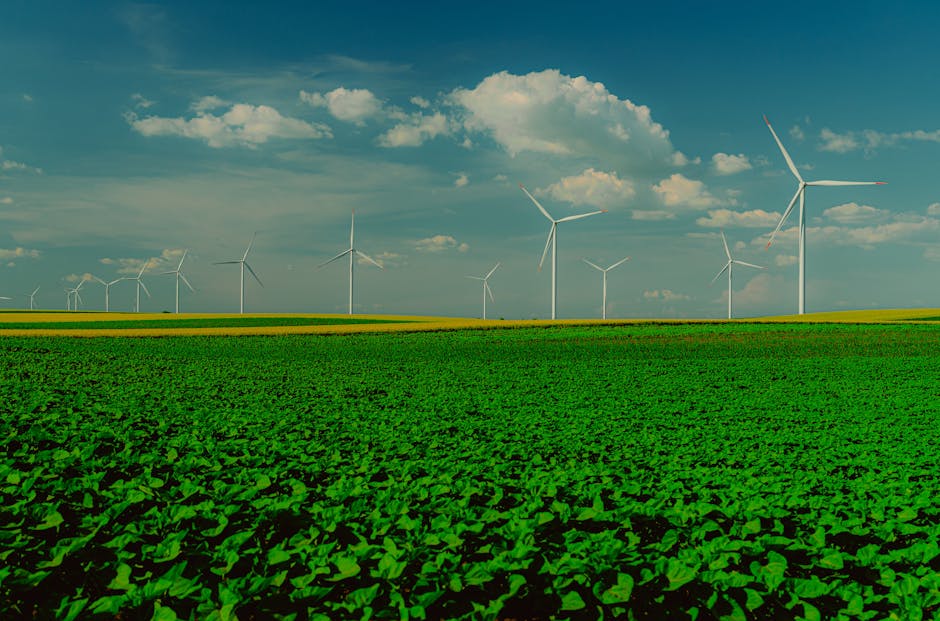
Energy history is not merely a tale of environmental discovery; it is a record of human systems evolving to capture increasingly dense sources of power. Long before the combustion engine defined the 20th century, early civilizations operated on pure renewable input. Water wheels, windmills, and biomass represented the first attempts at scaling production beyond manual labor. For the early operator, the challenge was simple: proximity to a constant force. This constraint dictated the geography of industry, forcing mills and factories to cluster around riverbanks and windy plains. It was a period where geography was destiny, and the primary strategy for growth involved securing high-output physical locations.
The Carbon Interruption
The industrial revolution introduced a shift in operational capability by decoupling production from immediate, site-specific renewable sources. Coal and petroleum allowed for massive portability. Leaders no longer needed to be near the river; they could build anywhere, provided they had an supply chain for fuel. This era institutionalized a reliance on extraction, creating legacy systems that now pose significant friction for modern operations. The reliance on fossil fuels became an architectural constraint, baked into the infrastructure of global cities and supply chains.
Renewables as a Systems Overhaul
We are currently experiencing a return to distributed power, but with one critical distinction: advanced technology. The transition to solar, wind, and geothermal is not just an environmental imperative; it is an exercise in complex systems engineering. For the modern leader, the return to renewables involves managing the intermittent nature of power delivery, requiring a high degree of precision in energy storage and grid integration. This is no longer about simple extraction, but about the sophisticated management of flow and throughput.
Operational Implications for the Modern Leader
High-performance thinking now demands a rethink of energy dependency. Organizations that integrate autonomous energy production are creating a hedge against volatility in the broader utility market. This is a move toward decentralization, reflecting broader trends in leadership where control is shifted from the center to the edge. When a company controls its own power generation, it builds a layer of resiliency that centralized power structures cannot replicate. This is the new frontier of operational excellence—minimizing reliance on fragile, legacy grids in favor of robust, local energy matrices.
The AI Synergy
Managing the grid of the future is an impossible task for human operators alone. The integration of AI in managing energy consumption patterns is the ultimate force multiplier. By predicting output fluctuations in solar or wind, machine learning models allow for real-time adjustments that optimize cost and uptime. Leaders who fail to see the nexus between energy management and digital transformation will find their overhead costs inflating as their competitors adopt smarter, AI-driven power strategies.
Explore more insights on structural growth at The BossMind platform.
Further Reading
”
}