
The Cognitive Frontier of Isolation
Modern leadership often mirrors the constraints of deep-space exploration: extreme isolation, high-stakes decision-making, and the need for absolute operational precision under pressure. As humanity looks toward Mars, the psychological research derived from space missions offers a rare, empirical window into how humans maintain cognitive performance when the margin for error is zero. This is not merely an academic exercise for astronauts; it is a blueprint for leadership teams operating in turbulent, high-consequence markets.
The Overview Effect and Strategic Perspective
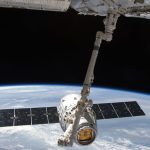
Astronauts frequently report the ‘Overview Effect,’ a cognitive shift that occurs when viewing Earth from space. They describe an immediate, visceral understanding of planetary fragility and interconnectedness. For a CEO or operational lead, this translates into the ability to decouple from immediate tactical noise to grasp the holistic health of an organization. Developing this mental distance allows leaders to prioritize long-term system stability over short-term reactive impulses, a cornerstone of effective strategy.
Stress Adaptation and Micro-Habits
In the confined, high-stress environment of the International Space Station, psychological stability is maintained through rigorous, habitual structure. NASA research into ‘Expeditionary Behavior’ emphasizes that social cohesion and self-regulation are as critical as technical proficiency. For the modern professional, this mirrors the necessity of productivity systems that survive extreme volatility. When external variables become chaotic, the strength of an individual’s internal operating system—their habits, protocols, and routine self-regulation—determines the trajectory of the outcome.
Human-AI Interaction in Isolated Environments
Space missions are increasingly dependent on AI to act as a force multiplier for remote crew members. Psychologically, this shifts the human role from direct laborer to systems supervisor. Leaders must learn to trust autonomous diagnostic tools while retaining final accountability. This model of human-in-the-loop decision-making is the future of corporate governance. By studying how astronauts interface with mission control and automated systems, managers can refine their own decision-making frameworks to balance machine speed with human judgment.
Operational Excellence through Redundancy
Space psychology also focuses heavily on team dynamics and the mitigation of ‘groupthink’ during prolonged confinement. High-performing crews utilize specific communication protocols to ensure that dissenting opinions are surfaced before they become mission-critical failures. In a corporate environment, this is the equivalent of building healthy operations where psychological safety is prioritized. Without this, teams risk the same failure modes found in isolated, high-pressure terrestrial environments.
For those looking to expand their understanding of these high-performance principles, visit thebossmind.net for deeper explorations into organizational architecture.




Leave a Reply