{
“title”: “Urban Design and Nature: The Hidden Constraint on Operational Success”,
“meta_description”: “Urban planning isn’t just aesthetics; it’s a structural challenge for growth. Discover how top operators integrate natural constraints into strategic design.”,
“tags”: [“urban planning”, “strategic design”, “operational efficiency”, “infrastructure”, “systems thinking”, “city development”],
“categories”: [“Business”, “Education”],
“body”: “
The Architect’s Fallacy in City Planning
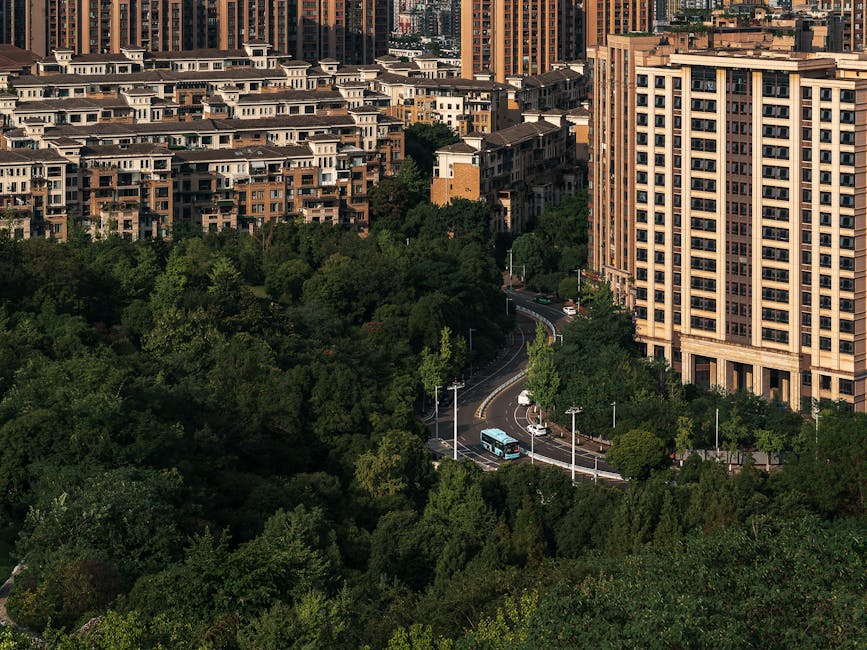
Most urban development suffers from a fundamental error: the belief that nature is a static backdrop rather than an active participant in system performance. When developers treat the environment as an obstacle to be cleared, they ignore the operational realities of heat island effects, water management, and human cognitive load. True strategic design requires moving beyond aesthetic integration and acknowledging that nature is an infrastructure layer with its own set of rules.
Entropy and Infrastructure Costs
Modern cities often fight against their own local geography. When we force rigid, non-porous materials into environments prone to saturation, we generate exponential maintenance costs. In terms of operational excellence, this is poor resource allocation. Leaders must view urban landscapes through the lens of long-term risk. Projects that incorporate biological systems—like bioswales instead of massive concrete drainage networks—lower the entropy of the system. This reduces long-term capital expenditure and improves asset longevity.
Cognitive Performance and the Built Environment
The relationship between urban density and human performance is well-documented but poorly applied. A city design that lacks accessible, high-quality green space induces constant low-level cortisol spikes in its population. For businesses operating in these hubs, this translates to diminished creative output and lower productivity. Effective leaders understand that the environment outside the office wall is a variable in their team’s performance equation. Investing in locations that respect biophilic principles isn’t a luxury; it is a calculation designed to maintain human capital at peak capacity.
The Data-Driven Future of Urban Spaces
We are entering an era where AI and predictive modeling allow us to simulate how wind, shadow, and moisture move through urban grids before a single shovel hits the dirt. The failure of past design was a reliance on intuition over empirical data. By modeling natural patterns, planners can optimize for energy efficiency, effectively turning a development into a self-regulating, high-efficiency asset. This is where decision-making shifts from reactive repair to proactive, data-informed system architecture.
Scaling Complexity Responsibly
As cities grow, the complexity of managing natural intersections increases. Leaders who wish to build resilient organizations must pay attention to how their urban environment scales. A city that fails to integrate nature is one that will face systemic failure during climate volatility. Those who adapt now, treating urban design as a complex system of interconnected living components, gain a structural advantage that competitors ignoring these realities will eventually forfeit. Visit thebossmind.net to see how we track these emerging trends in organizational and physical infrastructure.
Further Reading
”
}






Leave a Reply